Costa Rica has earned its reputation. For decades, Los Sueños and Quepos have been synonymous with billfish, and the country’s Pacific coast consistently produces double-digit sailfish days during peak season. If you’re chasing marlin on seamount expeditions, it’s still hard to beat.
But a growing number of anglers who’ve already done the Costa Rica circuit are looking south to Nicaragua. The reasons are simple. Uncrowded waters. A freshwater fishery that doesn’t exist anywhere in Costa Rica. Charter prices that run 40–60% less. And the kind of unpressured fishing that Costa Rica offered 20 years ago.
This isn’t a “one is better than the other” argument. It’s about what kind of fishing trip you’re after. We’ve been operating in Nicaragua since 1966, so we know both sides of this.
Planning a fishing trip to Nicaragua?
Tell us what species you’re after and we’ll design a custom itinerary.
Species Comparison: What Can You Catch?
Both countries border the Pacific and have access to the same pelagic migration routes. The offshore species overlap significantly. Sailfish, marlin, dorado, yellowfin tuna, wahoo, and roosterfish are available in both destinations. The real differences show up in freshwater and inshore diversity.
| Species / Fishery | Nicaragua | Costa Rica |
|---|---|---|
| Sailfish | ✓ Good numbers, less pressure | ✓ World-class (10–30+ per day peak) |
| Marlin (Blue/Black) | ✓ Year-round, inshore blacks | ✓ Elite seamount expeditions |
| Roosterfish | ✓ Inshore, less pressured | ✓ Strong inshore fishery |
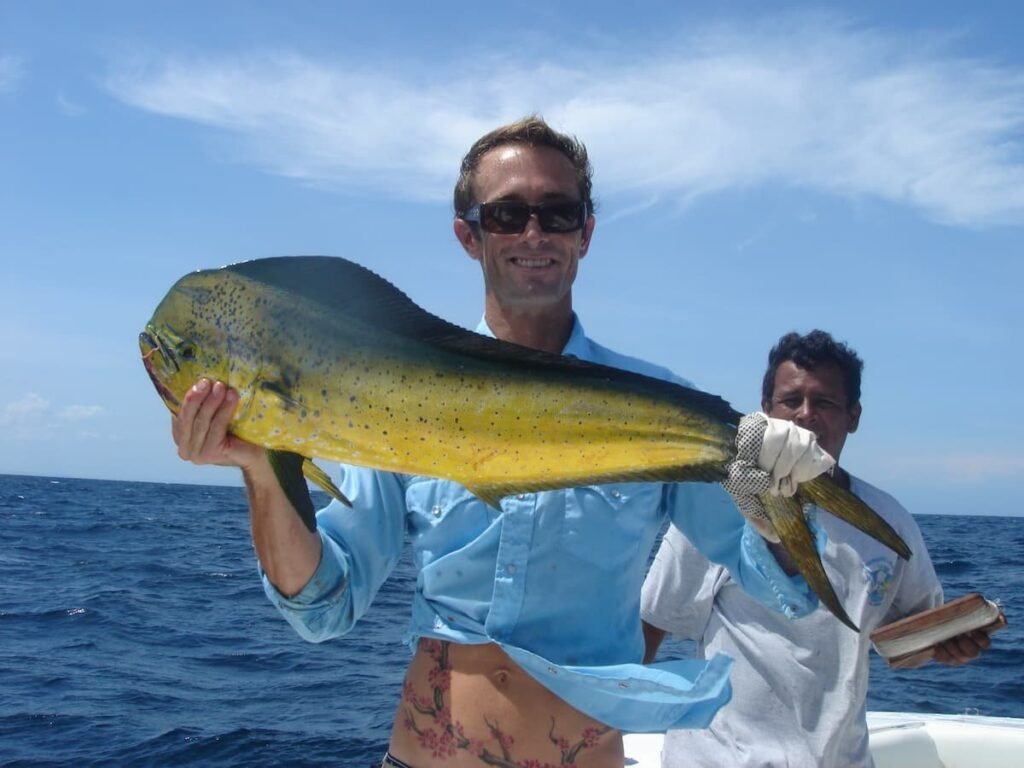
| Dorado / Mahi-Mahi | ✓ Peak May–October | ✓ Peak May–September |
| Yellowfin Tuna | ✓ Available offshore | ✓ Strong, growing fishery |
| Freshwater Tarpon | ✓ Giant 100–250lb+ tarpon | ✗ Limited (border rivers only) |
| Snook (Freshwater) | ✓ Lake Nicaragua, Rio San Juan | ✓ Caño Negro, Caribbean estuaries |
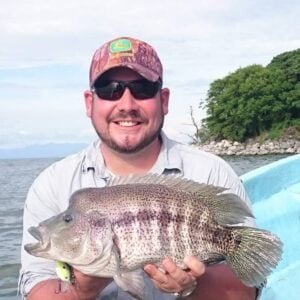
| Rainbow Bass | ✓ Lake Nicaragua endemic | ✗ Not available |
| Fishing Pressure | Low: few boats on the water | High: large charter fleets |
Bottom line: if your main goal is high-volume billfish days on tournament-grade boats, Costa Rica’s Pacific coast is purpose-built for that. But if you want species diversity, freshwater adventures you literally cannot get in Costa Rica, and the feeling of fishing water that hasn’t been hammered by charter fleets, Nicaragua wins.
Nicaragua’s Freshwater Advantage: Tarpon, Snook & Rainbow Bass
Nicaragua separates itself from every other destination in Central America with freshwater. Lake Nicaragua (Lake Cocibolca) is the largest lake in Central America, over 100 miles long and 45 miles wide, and it holds a fishery that has fascinated scientists and anglers for over a century.
The lake is home to freshwater tarpon that routinely exceed 100 pounds, with fish over 200 pounds documented. These aren’t coastal tarpon that wandered inland. They’re resident populations that have adapted to freshwater, giving them a distinctive dark coloring that’s earned them the nickname “black tarpon.” Jacques Cousteau himself studied these fish at the junction of the lake and the Rio San Juan.
The Rio San Juan, a jungle river flowing from the lake to the Caribbean, offers some of the most dramatic tarpon fishing on Earth. Picture hooking a 150-pound fish in a narrow jungle river, surrounded by howler monkeys and caiman, with no other boats in sight. That happens regularly here.
Add in trophy snook in the estuaries, rainbow bass (guapote) that are endemic to the region, and machaca on light tackle, and Costa Rica has nothing that competes. Costa Rica’s best freshwater option is the Caño Negro region near the Nicaraguan border, and even that is closed for several months each year during spawning season.
Cost Comparison: Charter Prices, Lodging & Total Trip Cost
Cost is where most anglers start paying serious attention. Costa Rica’s sportfishing infrastructure is world-class, but that quality comes with world-class pricing. Nicaragua delivers a comparable on-the-water experience at a fraction of the cost.
| Cost Category | Nicaragua (Typical) | Costa Rica (Typical) |
|---|---|---|
| Full-Day Offshore Charter | $450–$800 | $1,200–$2,000+ |
| Half-Day Inshore Charter | $250–$500 | $750–$1,000 |
| Fishing Lodge (Per Night) | $80–$200 | $200–$500+ |
| Meals (Per Day) | $15–$30 | $40–$80 |
| Airport Transfers | $50–$100 | $100–$250 |
| Fishing License | Included by operator | $15 per person/week |
| Beer at the Bar | $1–$2 | $4–$7 |
| 5-Day Trip Estimate (2 anglers) | $2,500–$4,000 total | $6,000–$10,000+ total |
A five-day fishing trip in Nicaragua with three days of charter fishing, comfortable lodging, meals, and transfers can realistically come in under $2,000 per angler. The same trip in Costa Rica’s Los Sueños area would run $5,000 or more per person. That’s not a marginal savings. It’s the difference between one trip a year and two.
Uncrowded Waters: Fishing Pressure Matters
Costa Rica welcomes over 2.6 million tourists annually. Its sportfishing industry is mature, with hundreds of charter boats operating out of marinas like Los Sueños, Quepos, Flamingo, and Tamarindo. On a busy day in peak season, you may see dozens of boats working the same offshore grounds.
Nicaragua is the opposite. Sportfishing tourism is still in its early stages. San Juan del Sur, Nicaragua’s Pacific fishing hub, has a handful of charter operators, not hundreds. When you head offshore, you’re often the only boat in sight. On the freshwater side, the Rio San Juan and Lake Nicaragua are essentially unpressured.
Experienced anglers know that low fishing pressure means healthier fish populations, less boat-shy behavior from game fish, and the kind of exploratory fishing that Marlin Magazine called “the best-kept secret in fishing right now.”
Nicaragua also has a natural advantage: no fish-aggregating devices (FADs). While Costa Rica and Panama use large-scale FADs to concentrate pelagic species close to shore, Nicaragua’s fishery remains entirely natural. Fish are where they are because the ecosystem put them there, not because a man-made structure drew them in.
When to Go: Season Comparison
Both countries offer year-round fishing, but the peak seasons differ slightly by species and coast.
| Season | Nicaragua | Costa Rica |
|---|---|---|
| Nov–Apr | Peak offshore: sailfish, marlin. Calm seas. Best overall conditions. | Peak sailfish season. Dry season. Highest prices and crowds. |
| May–Oct | Dorado, tuna surge. Rainy but fishable. Great inshore. | Green season. Dorado, tuna, marlin. Lower prices. |
| Year-Round | Tarpon, snook, rainbow bass (freshwater). Roosterfish inshore. | Billfish available all months. Roosterfish inshore. |
One underappreciated advantage of Nicaragua: the freshwater fishery operates year-round with no closed seasons for tarpon. In Costa Rica, the best freshwater fishing at Caño Negro shuts down from April through July for spawning protection. Nicaragua’s Lake Nicaragua and Rio San Juan are open 365 days a year.
The Cast & Blast Factor
Costa Rica cannot offer this: combining a fishing trip with world-class duck and dove hunting on the same vacation. Nicaragua is one of only three licensed hunting destinations in Central America, and Munditur operates cast-and-blast packages that pair morning fishing with afternoon wing shooting.
From November through March, blue-winged teal fill the lagoons near Chinandega while sailfish and marlin run offshore. A week-long cast-and-blast gives you both experiences in a single trip. Costa Rica has no legal hunting season for waterfowl, so if this combination appeals to you, Nicaragua is your only option in the region.
Interested in a cast & blast?
Our 7-day package combines wing shooting with jungle river fishing for tarpon and snook.
Getting There: Travel Logistics
Both countries are easily accessible from the U.S. Managua’s Augusto C. Sandino International Airport receives direct flights from Miami (under 3 hours) and Houston (about 3.5 hours). San Juan del Sur is roughly a 2.5-hour drive south from Managua on well-paved roads. Costa Rica’s San José airport offers more flight options, with Los Sueños about 1.5 hours from the airport.
Nicaragua requires no visa for U.S. and Canadian citizens (90-day tourist card for $10 on arrival). Costa Rica also allows visa-free entry for 90 days. Neither is complicated.
One practical advantage: Munditur handles everything from the moment you land. Airport pickup, ground transport, lodging, fishing charters, and meals are all arranged in advance. You don’t need to coordinate between multiple operators the way you often do in Costa Rica’s more fragmented tourism market.
So Who Should Go Where?
Both destinations are excellent. The right choice depends on what kind of trip you’re looking for.
- Choose Costa Rica if: you want the highest possible volume of billfish releases on a single day, you prefer a fully developed resort infrastructure with luxury marina amenities, or you’re planning a high-end corporate fishing retreat where optics and polish matter as much as the catch.
- Choose Nicaragua if: you want to fish uncrowded water that still feels wild, you’re looking for freshwater adventures (tarpon, snook, rainbow bass) that Costa Rica can’t match, you want your budget to stretch further without giving up quality, you prefer a less commercialized experience, or you want to combine fishing with hunting on the same trip.
We see it every season. Anglers who’ve done Costa Rica two or three times start looking for something different. They’ve caught the sailfish. They’ve done the Los Sueños run. Now they want the jungle tarpon, the empty Pacific waters, and a place that still feels undiscovered.
Nicaragua is that place. For now.
Ready to Fish Nicaragua?
Munditur Tours has been arranging fishing, hunting, and adventure trips in Nicaragua since 1966. Pacific offshore charters out of San Juan del Sur, jungle tarpon expeditions on the Rio San Juan, cast-and-blast packages that combine both. Our in-country team builds your trip from scratch.
Tell us your dates, your target species, and your budget. We’ll take care of the rest.

I have been a tour guide for over 20 years. I love to teach people about the natural beauty that our planet has to offer. As a part of my passion for the outdoors, I also enjoy fishing, hunting and more.